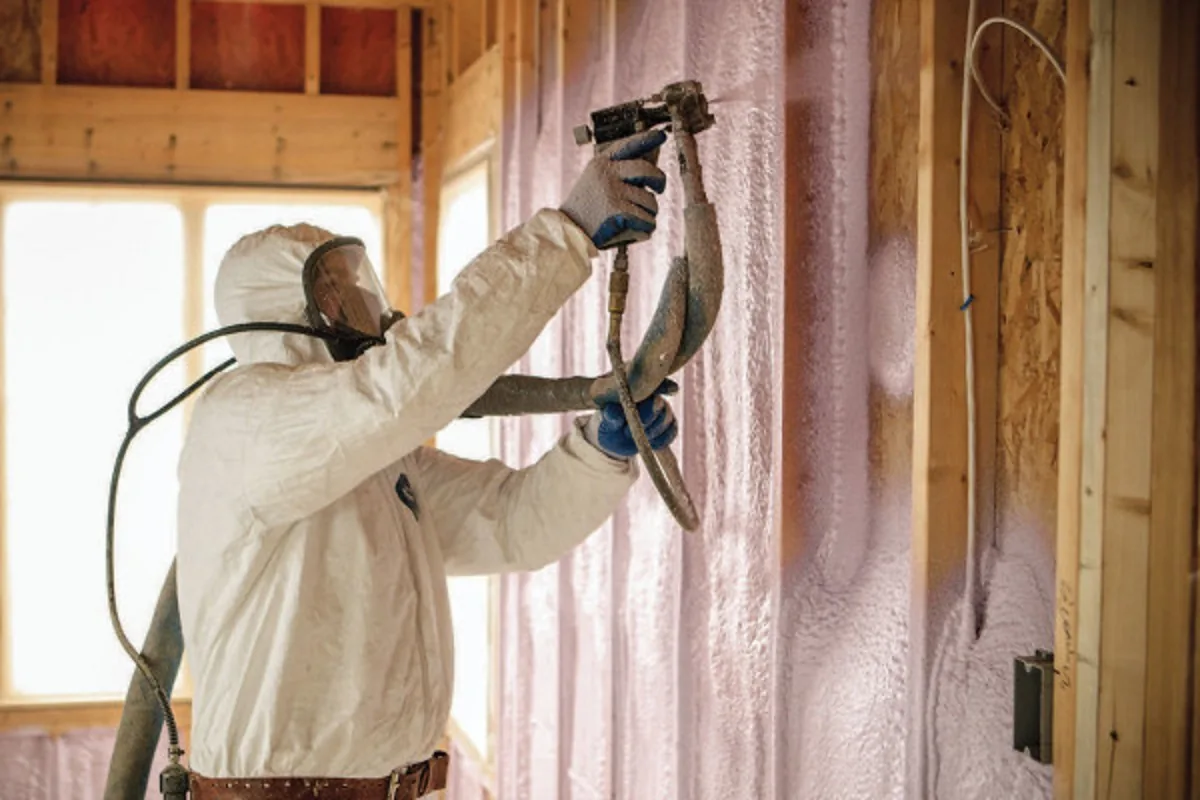
Suppose you’re looking to seal large areas, small spaces, or gaps between them. Anyone can appreciate foam insulation. And most importantly, it doesn’t require expertise to apply it. Knowing the different kinds of spray-on insulation that you can DIY can go a long way to enhance your home’s level of comfort.
R-Value and What It is for Foam Insulation
The insulation material must withstand heat to function: this is the R-value. The thickness, density, and material type influence the R-value (spray foam) and can tell that the material has the highest or lowest quantity that resists heat. Both kinds of foam that are open and closed cells provide different R-values and advantages in insulation.
Closed-cell foam
Closed-cell foam has densely packed cells, making it more insulating better. Because the cells are so closely packed, it is also resistant to water and heat – this means that it has an impressive R-value. Although the R-value is quite significant, this number may diminish over time.
Closed-cell, also known as high expansion foam, is better insulation for huge areas such as basements, attics, and garages.
Open-cell foam
The cells of open-cell and low expansion foam are not tightly packed and have a lower R-value when placed in the right location – this isn’t an issue in the insulation. Open-cell foam functions to act as an air-block. Unlike closed-cell foam, the R-value for open-cell foam will never change with time.
Spray-on insulation that is low expansion expands just 10% of the initial size of the spray, so it’s ideal for small places, such as cracks and holes in walls, floors, windows, etc.
It’s as simple as a bit of knowledge, the appropriate kind of foam, and the correct amount to effectively insulate your house. For the best spray foam services, talk at 613 Spray Foam.
We are here to help you be with a comfortable and safe experience. So please call us at (613) 319-8422 or e-mail us at info@613sprayfoam.ca