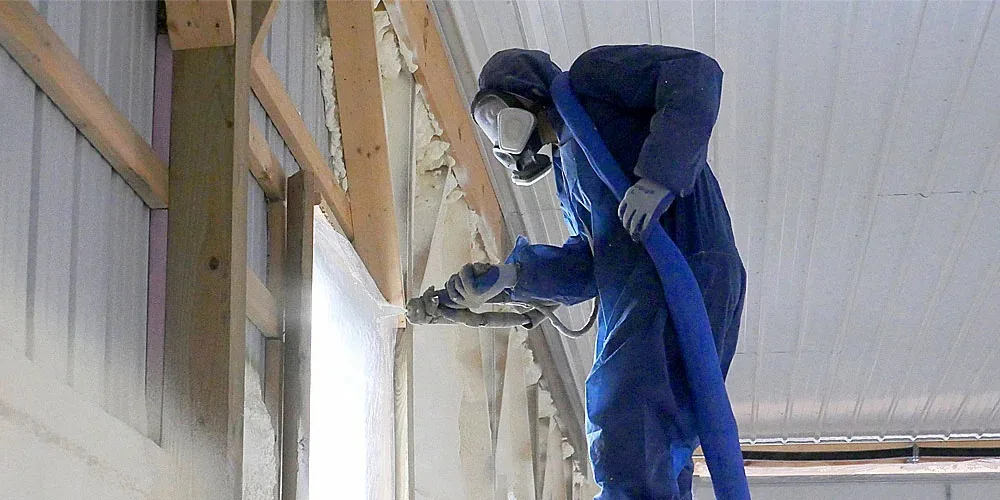
Spray foam insulation offers numerous long-term benefits for industrial buildings, from enhanced energy efficiency to improved structural integrity. Unlike traditional insulation materials, spray foam provides superior sealing and insulation properties, making it an excellent investment for industrial facilities. Here are some of the key long-term benefits:
Superior Energy Efficiency
One of the most significant advantages of spray foam insulation is its ability to reduce energy consumption. Industrial buildings, which often have large spaces and require significant heating and cooling, can experience major savings on energy costs with spray foam insulation.
- Air sealing properties: Spray foam expands upon application, filling gaps and cracks that could otherwise allow air leaks — creating an airtight seal that reduces energy loss and lowers heating and cooling costs over time.
- High R-value: Spray foam has one of the highest R-values of any insulation material, providing superior insulation in both cold and warm climates.
Moisture and Mold Resistance
Industrial buildings are often exposed to fluctuating temperatures, which can cause condensation and moisture buildup. Spray foam's closed-cell structure creates a water-resistant barrier that helps prevent moisture from seeping into walls, floors and roofs.
- Prevents mold growth: Resistance to moisture helps reduce the risk of mould and mildew, protecting both the building structure and occupant health.
- Protects equipment: By controlling humidity levels, spray foam protects sensitive machinery and inventory from potential moisture damage.
Enhanced Structural Strength
Spray foam insulation not only insulates but also adds to the structural integrity of a building. The foam's rigidity can strengthen walls, roofs and floors, making the building more resistant to wear and extreme weather.
- Wind and impact resistance: In areas prone to high winds or storms, spray foam provides added support to help buildings withstand harsher conditions.
- Extended building lifespan: By reinforcing the structure and reducing environmental stress, spray foam can extend the overall lifespan of the building.
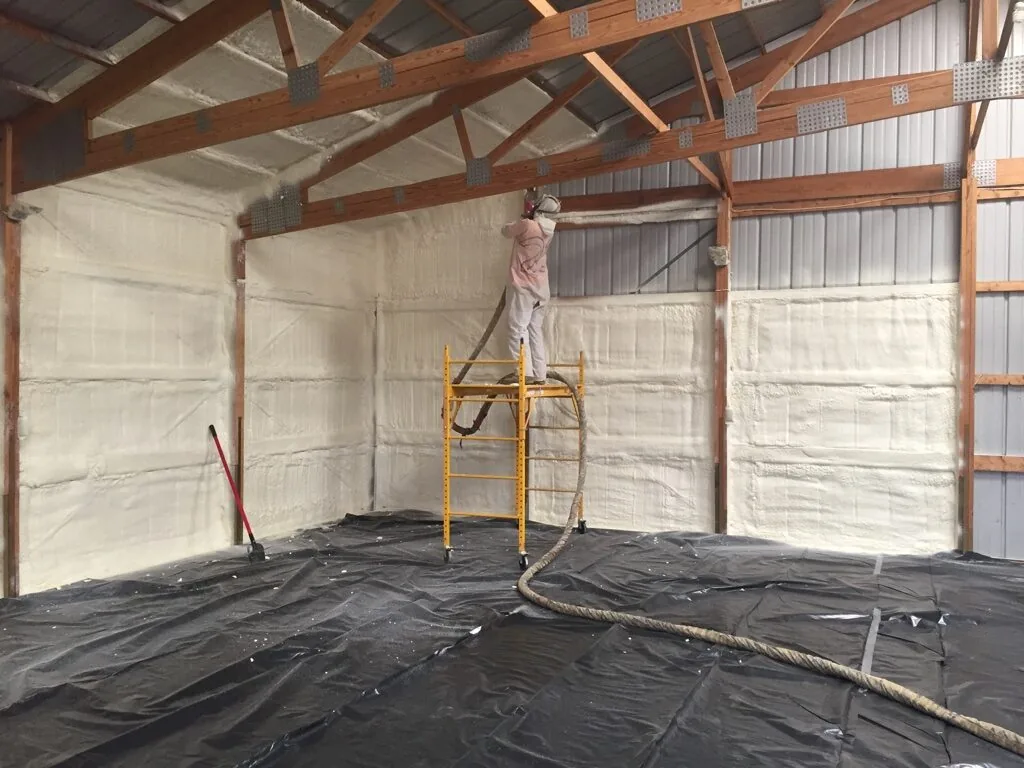
Soundproofing and Noise Reduction
Industrial buildings can be noisy due to machinery, equipment and high activity. Spray foam has excellent soundproofing capabilities, helping reduce noise levels within and outside the building.
- Absorbs sound: Its dense structure absorbs sound waves, minimizing noise transmission between areas or to the surrounding community.
- Improves worker comfort: Quieter environments improve comfort and productivity, especially where loud machinery runs continuously.
Environmental and Financial Benefits
Over time, spray foam insulation provides significant environmental benefits by reducing energy consumption and lowering the carbon footprint of industrial buildings — while the energy savings deliver a strong return on investment.
- Lower energy costs: Reduced heating and cooling requirements mean significant savings, often recouping the installation cost within a few years.
- Sustainability: Many spray foam products are made with eco-friendly materials, a sustainable option for facilities reducing their environmental impact.
Conclusion
Spray foam insulation offers numerous long-term benefits for industrial buildings — superior energy efficiency, moisture resistance, structural reinforcement, soundproofing and sustainability. For industrial property owners, investing in spray foam is a long-term solution that boosts efficiency, protects assets and contributes to environmental sustainability. For a professional consultation, reach out to the 613 Spray Foam team to explore how spray foam can benefit your facility.