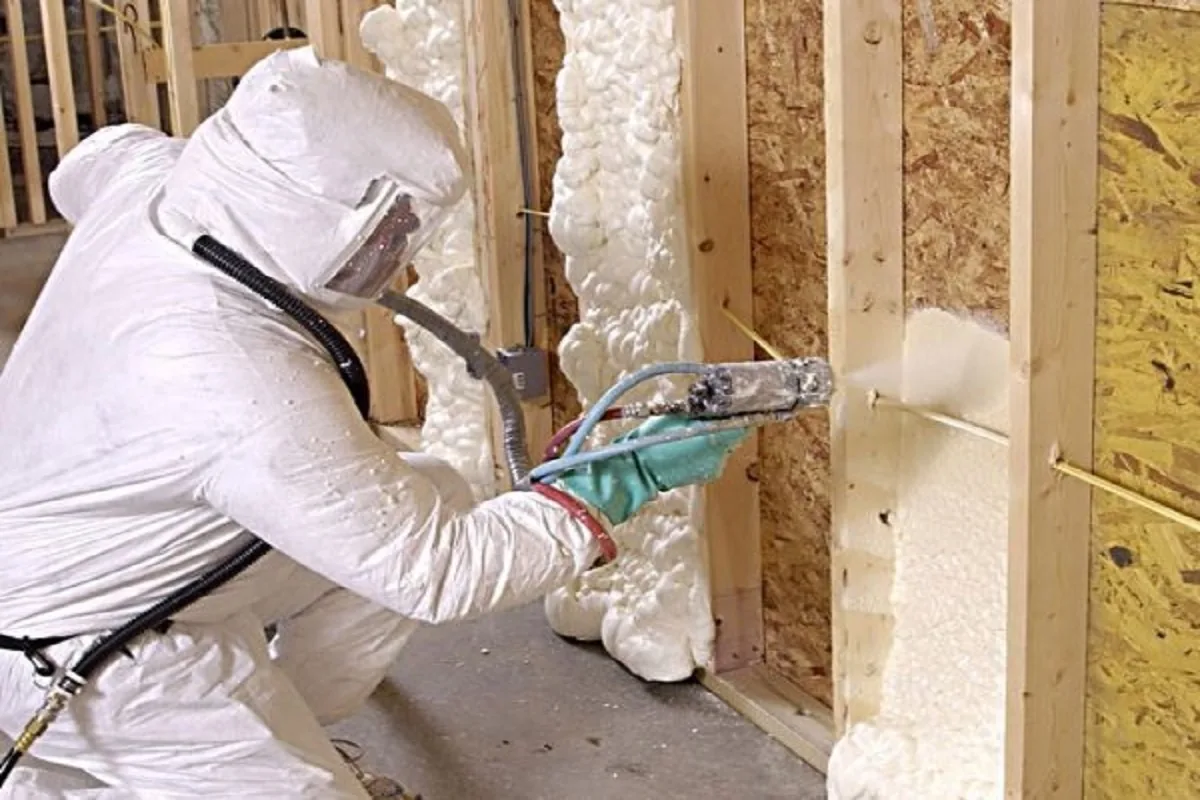
The spray foam insulation is renowned for excellent thermal management for commercial and residential applications. It is a great choice for attics and walls and provides an all-in-one exterior insulation option. Closed cells, as well as open-cell, both offer various benefits about price and performance. Knowing the distinctions between closed and open cells of spray foam insulation may be vital to ensure your attic and walls are well-insulated and sealed.
Spray foam with open or closed cell structures possesses different physical forms, providing them with other acoustic and thermal characteristics. In analyzing these differences understanding the process of making foam insulations is essential. Foam insulations get created from two chemical compounds that expand rapidly after contact with one another. When spray foam is open-cell, the bubbles burst and leave behind only struts. For closed-cell insulation, bubbles don’t break apart but instead form interconnected pockets.
Although open cell foam is typically cheaper compared to closed cell foam, the differences in R-values between the two types of foam mean that any system that uses open-cell spray foam will require more materials than the closed-cell spray foam to reach a specific R-value, it is essential to keep this in mind because the beginning costs for materials may not reflect the project’s total installed price.
Both closed-cell and open-cell spray foams will fill the gaps where they get put. Still, only closed-cell spray foam will have the additional advantage of being able to produce a vapor barrier. Suppose the job requires the integration of a vapor barrier as well as insulation in one. In that case, the closed-cell spray foam can offer this actual performance. To ensure this, every continuous exterior insulation project that uses spray foam must use closed cells.
Both materials have distinct advantages that system builders and installers can rely upon to design and build solid and energy-efficient structures. You get a unique blend of knowledge, experience, and individual focus on your insulation requirements. For more information on spray foam insulation, call 613 Spray Foam at (613) 319-8422. You can also email us at info@613sprayfoam.ca to safeguard your business or home.